
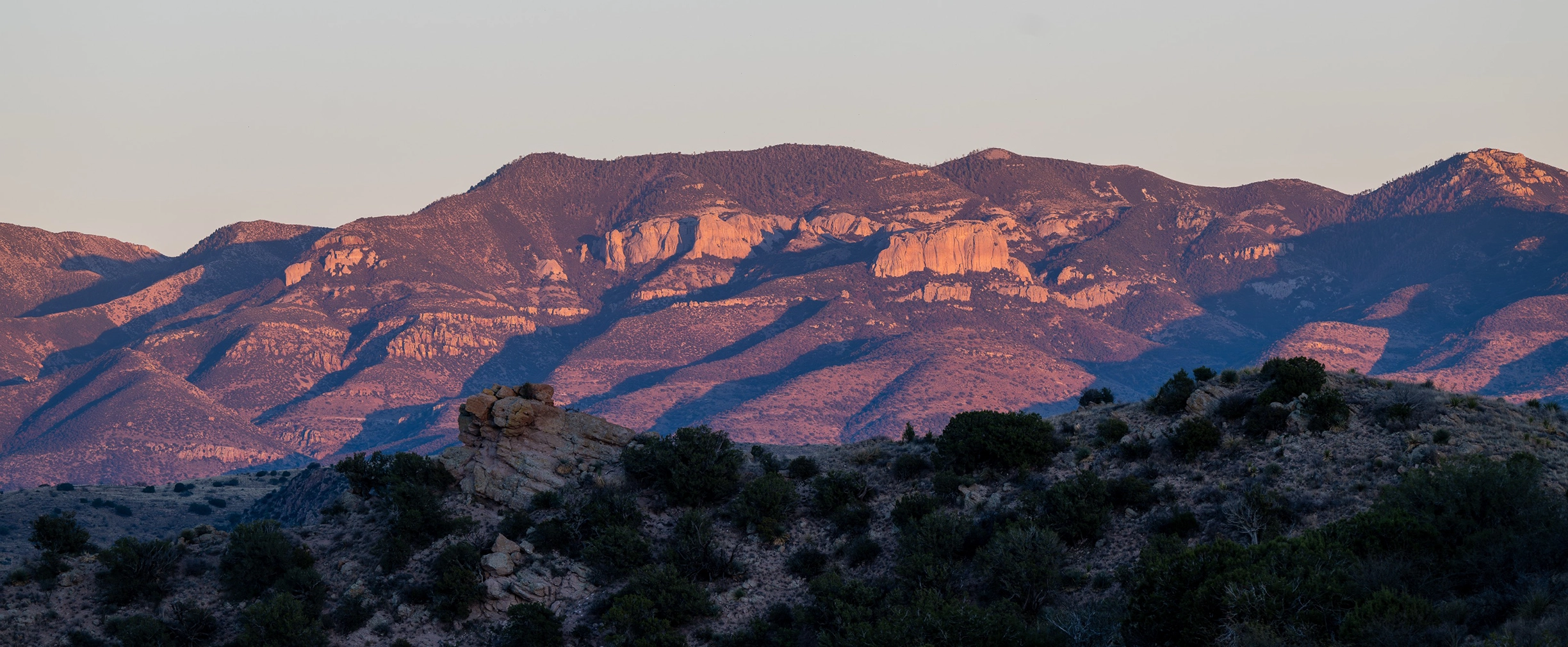
Covering more than 130,000 acres—or approximately 51,000 hectares—of protected grasslands, creeks, wetlands, oak woodlands, and Sky Island mountains, the Cuenca Los Ojos Reserve lies at the meeting point of the Sonoran and Chihuahuan Deserts and the Sierra Madre Occidental. This extraordinary landscape serves as a critical ecological bridge between the United States and Mexico, and supports an exceptional diversity of rare and migratory wildlife.
At the heart of Cuenca’s vision for this landscape is the return of native species and the revival of the ecological relationships and natural processes that allow the entire landscape to flourish—an ecosystem management practice known as rewilding. Through the Cuenca Rewilding Initiative, we aim to restore not only habitats but also interconnected ecological relationships through a coordinated combination of wildlife recovery, habitat protection, landscape connectivity, applied science, long-term monitoring, and community partnerships. By putting the essential components in place, then allowing natural processes to take over, we return wildness to the land.
Our 30+ year investment in watershed and riparian restoration has created the foundation for this ambitious new era of rewilding—one focused on restoring native species, ecological relationships, and the natural processes that allow an entire landscape to flourish.
Rewilding a Landscape
Renewing Grasslands with Regenerative Grazing
Generations ago, bison shaped the grasslands of Northern Mexican. Their movement, grazing, and presence built soil, cycled nutrients, and sustained life. In early 2026, Cuenca Los Ojos, in partnership with CONANP, FMCN, and SEMARNAT brought 29 conservation bison from Rancho El Uno in Chihuahua to our Reserve in Sonora, returning bison to this landscape for the first time in 200 years. These animals, descended from the Wind Cave National Park lineage, represent one of the most important conservation herds in North America.


Strengthening Connections for Wildlife
Cuenca Los Ojos sits at the northern edge of the jaguar’s natural range, offering more than 51,000 hectares of wild northern Sonoran landscape. This geography is especially important for jaguars and other animals that depend on the ability to move across enormous territories. Major jaguar movement occurs through this region, making the protection of this corridor critically important to the species’ recovery in northern Mexico and the southwestern United States.
A Critical Conservation Connection
Our reserve lies between the Northern Jaguar Project’s protected landscape to the south and the Malpai Borderlands, Chiricahua Mountains, and Coronado National Forest to the north. With perennial water, available native prey, rugged mountains, and grasslands, Cuenca provides a natural bridge between Mexico’s northern jaguar population and suitable habitat in Arizona and New Mexico. The same connected landscape supports mountain lions, black bears, Mexican wolves, ocelots, pronghorn to the north of the border wall, deer, and many other species whose survival depends on intact habitat extending across political and property boundaries.

A Legacy of Restoration
Over the past 30 years, Cuenca has restored many natural components that were missing from the ecosystem. Restoration of waterways has provided habitat for large carnivores, such as black bear, jaguar, and ocelots to return. Regenerative ranching has brought back large herbivores, including the reintroduction of bison that now once again roam the land. Planting and seeding of trees and grasses have boosted nutrient and carbon cycles and water infiltration, while an increased number of flowering plants catalyzes pollination, to the benefit of both flora and fauna. Through these processes, Cuenca is rewilding the land and allowing nature to continue to evolve.
Meet Our Rewilding Experts
Cuenca is now putting this vision into action with the first dedicated rewilding team in its history. Our Rewilding Director and Conservation Director work alongside an experienced group of restoration practitioners. Together, they are guiding species recovery, restoring habitats, measuring ecological change, and ensuring that decisions are grounded in careful observation, sound science, and more than three decades of experience on the land.
Valerie Gordon
Executive Director
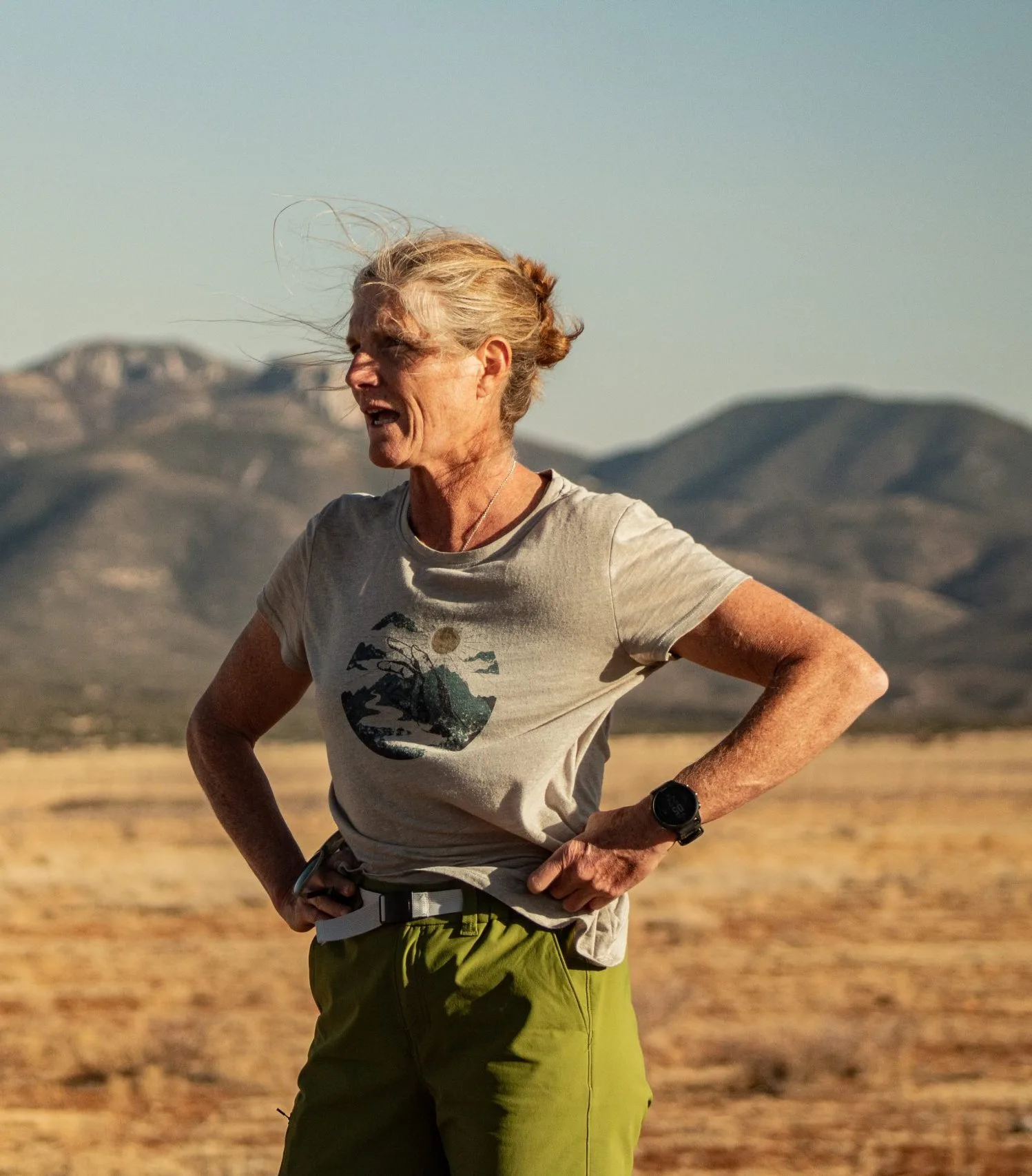
Valerie Gordon is the Executive Director of Cuenca Los Ojos. At Cuenca, building on her career experience with endangered species habitat protection and working-landscape transition zones, she is now focused on rewilding core species, with a particular interest in restoring grasslands and reintroducing native herbivores and ecosystem engineers to the Northern Mexican landscapes.

Dr. Emiliano Donadio
Rewilding Director
Dr. Emiliano Donadio is the Rewilding Director at Cuenca Los Ojos. In this role, Emiliano is responsible for implementing our rewilding program, Cuenca’s intentional efforts to reintroduce and reinforce the populations of species that have been lost from the landscape over time. As one of the world’s leading experts in rewilding, Emiliano guides our team’s wildlife reintroduction approach as part of our large landscape restoration strategy.

Dr. Peter Winsor
Conservation Director
Dr. Peter Winsor is the Director of Conservation at Cuenca Los Ojos, overseeing all habitat restoration and monitoring across the Cuenca Reserve. Working closely with Cuenca’s Rewildling Director, Peter is responsible for setting our strategy for managing these landscapes, as well as for determining how we measure, evaluate, and respond to changing conditions across the Reserve.
